


How many times have you heard that “posture can’t be changed”? That “you were born this way” or “this is simply how your body is built”?
The truth is that not only can posture change—it can also serve as one of the most direct tools for rehabilitation and deep healing. Our posture and movement patterns are not simply a matter of muscular strength or ergonomics. They are a reflection of our nervous system, our experiences, and—most importantly—the trauma we carry, even trauma that may not be our own.
What Is Intergenerational Trauma?
Intergenerational trauma refers to psychosomatic patterns passed down from one generation to the next: emotional patterns, survival mechanisms, fears, and stress responses. These patterns do not “live” only in the mind. They also live in the body.
More specifically, they are held within the fascia—the connective tissue that surrounds every muscle, organ, and nerve fiber. Fascia is the body’s “living memory,” where long-standing patterns of defense, fear, and trauma are stored.
Why Should We Change Our Posture and Movement?
When we change our posture, we are not simply changing the way the body is positioned. We are changing the way our nervous system perceives safety, our relationship with the space around us, and the flow of energy.
Through proper movement retraining, we can release the physical imprints of intergenerational trauma from the body, reduce chronic pain, restore functionality, and—yes—even change the way we think and connect with others.
Can Any Form of Exercise Change Posture?
The answer is no.
Most forms of exercise are not designed to restore the functionality of the human body as a whole. They typically focus on strength, flexibility, or endurance without considering how the body moves in relation to gravity, the coordination of muscular chains, or the connection between the fascia, nervous system, and musculoskeletal system.
Without this holistic approach, exercise may not only fail to correct posture but may also reinforce existing dysfunctional movement patterns and, in many cases, worsen pain.
Functional Patterns: The Method That Addresses Trauma Through Movement
Functional Patterns (FP) is a specialized rehabilitation method aimed at fully retraining the body based on the natural principles of human biomechanics.
What sets the method apart is that it:
- Works directly with the function of the fascia, where intergenerational trauma is recorded and “stored.”
- Assesses and restructures an individual’s posture and movement patterns with the goal of achieving biomechanically efficient, natural movement.
- Provides measurable and visible results, including changes in alignment, pain, mobility, and overall physical function.
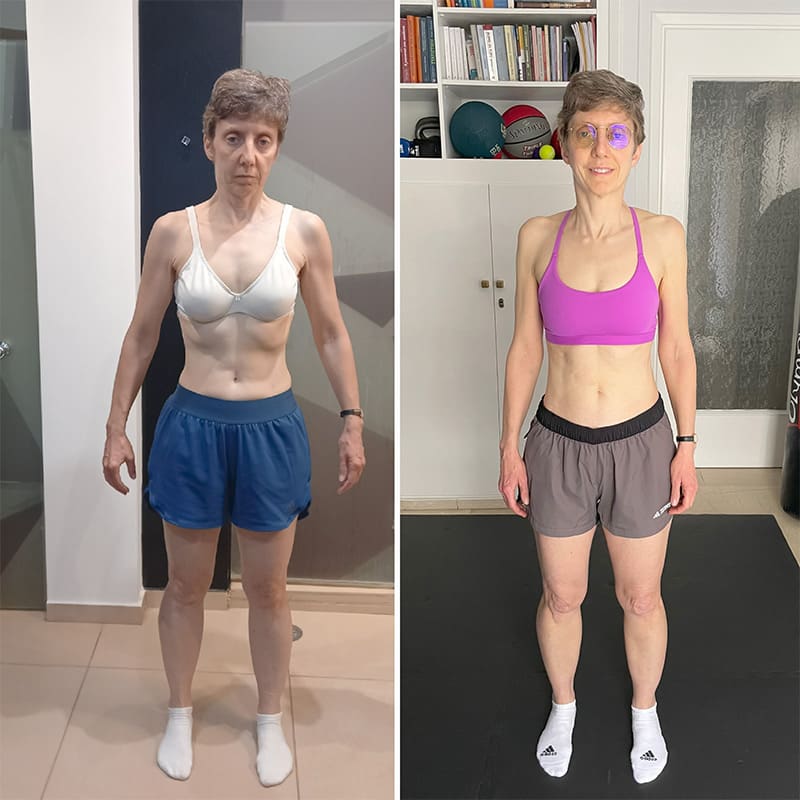
Functional Patterns in Greece: Important Work in Progress
Functional Patterns is practiced in Greece by three certified professionals, offering a structured and evidence-informed approach to rehabilitation.
Serres: Giannis Tsioulis
Katerini: Nikos Amanatiadis
Athens: Nikoletta Kaseri (Kolonaki & Koukaki | Athens Biomechanics Training)
Nikoletta Kaseri, a judo champion and graduate of the School of Physical Education and Sport Science at Aristotle University of Thessaloniki, was introduced to the method in 2019, radically transforming her body and her life. From 2022 through 2025, she trained and retrained in Levels 1, 2, and 3 of the method (out of a total of four), developing specialized expertise in Human Biomechanics.
She has worked at the method’s European headquarters in Madrid, and since 2023, through Athens Biomechanics Training, she has been providing people in Greece with solutions for chronic pain, dysfunctional posture, and the release of physical imprints of trauma.
Conclusion
Posture is a map of memory. Every tension, contraction, and asymmetry may be the trace of an old, unconscious trauma. But that map can be rewritten.
With the right tools—and the right guidance—the body can remember how to function properly. And when the body regains its functionality, trauma can be processed, released, and transformed.
Sources
- Bordoni B, Zanier E. Clinical and symptomatological reflections: the fascial system. J Multidiscip Healthc. 2014 Sep 18;7:401-11. doi: 10.2147/JMDH.S68308. PMID: 25258540; PMCID: PMC4173815.
- Tozzi P. Does fascia hold memories? J Bodyw Mov Ther. 2014 Apr;18(2):259-65. doi: 10.1016/j.jbmt.2013.11.010. Epub 2013 Nov 9. PMID: 24725795.
- Ruth Duncan Does Fascia Hold Memories Part 1, May 2023 https://www.researchgate.net/publication/
- Marshall PJ, Meltzoff AN. Neural mirroring mechanisms and imitation in human infants. Philos Trans R Soc Lond B Biol Sci. 2014 Apr 28;369(1644):20130620. doi: 10.1098/rstb.2013.0620. PMID: 24778387; PMCID: PMC4006193.
- Paulus M, Hunnius S, Vissers M, Bekkering H. Imitation in infancy: rational or motor resonance? Child Dev. 2011 Jul-Aug;82(4):1047-57. doi: 10.1111/j.1467-8624.2011.01610.x. Epub 2011 Jun 16. PMID: 21679175.
- Marshall PJ, Meltzoff AN. Neural mirroring mechanisms and imitation in human infants. Philos Trans R Soc Lond B Biol Sci. 2014 Apr 28;369(1644):20130620. doi: 10.1098/rstb.2013.0620. PMID: 24778387; PMCID: PMC4006193.
- Janette Zamudio Canales,(2010) Posture and body image in individuals with major depressive disorder: a controlled study https://doi.org/10.1590/S1516-44462010000400010
- Sandrone S. Roger W. Sperry (1913-1994). J Neurol. 2022 Sep;269(9):5194-5195. doi: 10.1007/s00415-022-11232-6. Epub 2022 Jul 22. PMID: 35867150; PMCID: PMC9363358.
- Sousa AS, Silva A, Tavares JM. Biomechanical and neurophysiological mechanisms related to postural control and efficiency of movement: a review. Somatosens Mot Res. 2012;29(4):131-43. doi: 10.3109/08990220.2012.725680. Epub 2012 Oct 25. PMID: 23094940.
- Aasa U, Bengtsson V, Berglund L, Öhberg F. Variability of lumbar spinal alignment among power- and weightlifters during the deadlift and barbell back squat. Sports Biomech. 2022 Jul;21(6):701-717. doi: 10.1080/14763141.2019.1675751. Epub 2019 Nov 13. PMID: 31718474.
- Shamaei Irani, Gh. Injuries/Harms Resulting from Incorrect Adjustments/Alignments Performed by Yoga Asana Practitioners. Arch Pharma Pract 2020;11(3):38-47.
- Marc Campo, Mariya P. Shiyko, Mary Beth Kean, Lynne Roberts, Evangelos Pappas, Musculoskeletal pain associated with recreational yoga participation: A prospective cohort study with 1-year follow-up,Journal of Bodywork and Movement Therapies,Volume 22, Issue 2,2018,Pages 418-423,ISSN 1360-8592,
- Cramer, H., Quinker, D., Schumann, D. et al. Adverse effects of yoga: a national cross-sectional survey. BMC Complement Altern Med 19, 190 (2019). https://doi.org/10.1186/s12906-019-2612-7
- Michalak J, Rohde K, Troje NF. How we walk affects what we remember: gait modifications through biofeedback change negative affective memory bias. J Behav Ther Exp Psychiatry. 2015 Mar;46:121-5. doi: 10.1016/j.jbtep.2014.09.004. Epub 2014 Sep 28. PMID: 25310681.
- Overmann L, Schleip R, Michalak J. Exploring fascial properties in patients with depression and chronic neck pain: An observational study. Acta Psychol (Amst). 2024 Apr;244:104214. doi: 10.1016/j.actpsy.2024.104214. Epub 2024 Mar 10. PMID: 38461580.
Books
- Van der Kolk, Bessel – The Body Keeps the Score
- Jack Kruze Epi-Paleo RX
- Naudi Aguilar-Power of Porture


